

Energy savings is the practice of using less energy to run your business while still delivering the same—or better—comfort, safety, and performance.
For most facilities, that means lowering utility bills, reducing unnecessary waste, and upgrading to smarter, more efficient technologies like LED lighting.
In this article, we’ll look at why energy savings should be a priority, how LED lighting contributes to dramatic reductions in consumption and costs, real-world examples from cities and businesses around the world, and practical options you can implement—especially with the help of Relumination as your energy-efficient lighting partner.
Understanding Energy Savings in Your Business
When you own or manage a business, you have numerous expenses to consider, including your energy usage.
Energy savings is about reducing those ongoing costs without sacrificing the experience of your employees, customers, or tenants.
Some key ideas:
- Lighting is a major energy user. According to the U.S. Energy Information Administration, lighting accounts for about 17% of total energy usage in commercial properties. Much of that comes from power-hungry fluorescent, metal halide, and incandescent lighting.
- Small improvements add up. Even changing a thermostat setting by one degree can help save as much as 3% on the next bill. Switching a single high-wattage fixture to an efficient LED can cut its consumption by half—or more.
- Energy savings isn’t just about electricity. It includes reducing cooling loads (by generating less heat), lowering maintenance demand, and taking advantage of natural light and smart controls.
Relumination specializes in helping commercial and industrial facilities understand where their energy is going, then designing lighting and control strategies that reduce consumption while improving the quality of light.
Why Energy Savings Should Be a Priority
Direct impact on your bottom line
Commercial building managers are continuously seeking innovative ways to reduce costs. However, lighting replacement projects are often pushed aside for upgrades such as HVAC systems, storage fixtures, and interior space expansions.
That’s a missed opportunity.
- Lighting costs can comprise up to almost 17% of a facility’s total energy expenditures.
- Parking garages, for example, are some of the most wasteful structures when it comes to energy: many are lit 24/7/365, often with fixtures consuming over 100 watts of power each.
Every kilowatt-hour you don’t use is one you don’t pay for—month after month, year after year.
Comfort, safety, and customer experience
Energy savings and a great environment go hand in hand:
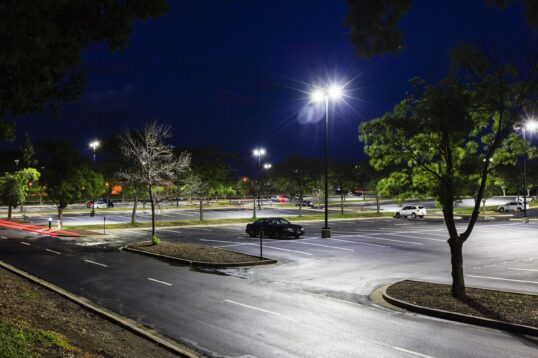
- People don’t like walking through dark parking lots or poorly lit hallways, especially after Daylight Savings Time when nightfall comes quickly. The right mixture of efficient lights can highlight your business, hospital, parking lot, or walkway without flooding the area with harsh, annoying light.
- In fitness centers and gyms, it’s uncomfortable to work out in a warm, humid space. Old halogen lamps not only use a lot of power; they pump heat into the room. Cooler LED lighting makes the environment more comfortable and reduces the load on air conditioning.
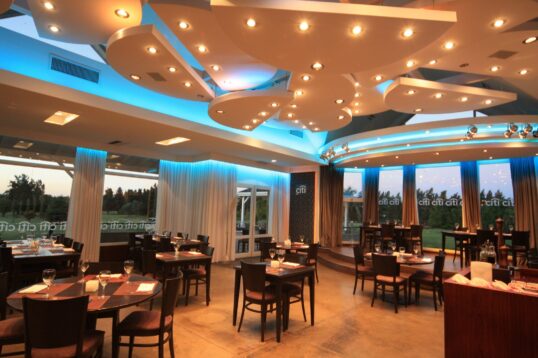
- Retail and hospitality businesses rely on lighting to make that all-important first impression. There’s a reason people talk about “mood lighting”—you can create the environment you want in the minds of your customers by picking the correct style of lighting, while still reducing energy.
Lighting is something your stakeholders see and feel every time they interact with your space. Doing it efficiently amplifies both savings and experience.
Environmental responsibility and resilience
Inefficient energy use is detrimental for both the planet and your bottom line.
After the earthquake and associated damage at Tokyo Electric Power Company’s Fukushima No. 1 Nuclear Power Plant, researchers began investigating the nation’s energy consumption and saving methods. An Institute of Energy Economics study, overseen by the Ministry of Economy, Trade and Industry, determined that if every fluorescent and incandescent light in Japan were replaced with an LED lamp, the country could reduce its energy consumption by 9%.
Energy savings on this scale:
- Reduces demand on the grid
- Lowers greenhouse gas emissions
- Makes buildings and cities more resilient in the face of disruption
By improving energy performance in your own facility, you’re participating in a much larger solution.
How LED Lighting Drives Energy Savings?
LED lighting technology sits at the center of modern energy savings strategies because it dramatically reduces electricity use while improving performance.
Dramatically lower energy use
Simply put, LEDs are greener than grass.
Compared to traditional options:
- LED lights use 50% to 90% less energy than a conventional light bulb, depending on the application.
- A 4-foot, 32-watt fluorescent bulb actually uses about 34 watts due to ballast inefficiencies. An LED tube replacement in the same area uses only 16 watts—less than half.
- In many commercial retrofits, LEDs are shown to be 75% more efficient than the fixtures they replace.
Real examples:
- In Raleigh, North Carolina, 141 120-watt high-pressure sodium parking garage fixtures were replaced with 70-watt LED fixtures, half of them with photocell sensors so they turn off during the day. The city now produces only 128 kilowatt-hours of electricity per day, or 46,720 kWh per year, with electricity savings totaling $2,803 annually.
- In Osaka Prefecture, Japan, brand new 25-watt Philips Lumiled LED lamps replaced high-pressure mercury lamps in a park, reducing electricity bills by 88% while providing comparable brightness and much more uniform lighting.
- Along 75 miles of highway in China, more than one million Cree LEDs replaced high-pressure sodium fixtures. The new lighting consumes 60% less energy, with savings that will pay for the project in about four years.
When you multiply these differences across all the fixtures in a facility—or across all the streetlights in a city—the savings run into the tens of thousands, hundreds of thousands, or even millions of dollars.
Reduced cooling loads and heat generation
Conventional bulbs generate heat, creating light as a byproduct. Incandescent lights, for example, generate greater amounts of heat caused by the electric current traveling through the filament. To compensate for this added heat, cooling systems and fans must work harder, adding to energy costs.
LEDs work differently:
- They use electroluminescence, where an electric current passes through a semiconductor chip to produce light directly.
- Excess heat is drained into a heat sink within the unit to ensure efficiency and longevity.
- The result is a much cooler light with minimal heat wasted.
In one case, the Bristol Marriott Hotel replaced 145 50-watt halogen lamps throughout its fitness center with 4-watt Greenled Anatares LED lamps. The old halogens also required about 14 watts of extra air conditioning load per lamp to keep the room comfortable. After the LED retrofit:
- The hotel was able to turn the air conditioning down.
- It will save about $8,000 on electricity and reduce consumption by 43,822 kWh annually.
Especially in hot climates, LEDs help your climate control system work less, saving even more energy.
Longer life and lower maintenance
Reduction in maintenance costs is another powerful reason to use LED lighting.
- A report by ENERGY STAR states that LED lights last 35 to 50 times longer than traditional bulbs.
- Expertly engineered LED lights have the potential to last 8–10 times longer than fluorescent lighting of comparable brightness.
- LED parking garage fixtures may only need to be changed every 5 to 22 years, rather than every few months.
In Raleigh’s parking garage:
- Maintenance savings totaled $3,325 per year because fixtures need far fewer replacements and the sealed design keeps insects, dirt, and moisture out, meaning the insides don’t have to be cleaned regularly.
Every bulb you don’t have to replace is one you don’t have to buy, stock, or pay someone to install at inconvenient times.
Better lighting performance and health
Energy-reducing LED lighting doesn’t just save power; it provides improved lighting performance:
- After several years, LED lights can maintain the same brightness as when they were first installed, where other lighting options often dim.
- Illuminated surfaces or objects do not experience negative effects with LED lighting, unlike some fluorescent or incandescent options that can distort color or fade materials.
- LED lighting emits no ultraviolet (UV) or infrared (IR) light, so you don’t have to worry about damage to skin, eyes, artwork, or sensitive products.
It’s also better for people:
- It’s a little-known fact, but the occasional flicker that fluorescent lighting gives off has a draining effect on people. It’s one of the major causes of after-lunch fatigue in workers.
- A softer blue-white LED light avoids this problem and is known to help lift spirits and support alertness.
In parking garages and public spaces, LED lighting boosts perceived safety.
After Raleigh’s retrofit, surveys of 200 customers revealed that both men and women felt safer, thought the light quality was better, and felt the garage was cleaner and easier to maneuver through.
Real-World LED Energy Savings in Action
Hospitals and health systems
NorthShore University Health System in Illinois—named one of the “Top 10 Health Systems” in the U.S.—was looking for a green change. Their parking garage, built in the 1980s, still used 175-watt metal halide lamps. The lighting was inadequate, expensive to run and maintain, and people had complained.
After testing four different LED lamps that were described as “big glare bombs,” the project went to Kenall Manufacturing, which suggested TekDek LED lighting with a SmartSense control system.
- They replaced 34 lights on the third floor (the most highly traveled area).
- The difference was phenomenal: the light was uniform and spread from floors to walls to ceilings, and electricity costs were reduced.
- With the SmartSense control system, which adjusts itself daily based on occupancy and available daylight, the hospital is saving 78.25% on energy and will see a return on its investment in a little over one year.
One takeaway from this case: LED savings are not just about lumens per watt. Pairing efficient fixtures with smart controls unlocks the biggest reductions.
Fitness centers and hospitality
As mentioned earlier, the Bristol Marriott Hotel in the UK solved an uncomfortable, warm gym by replacing halogen downlights with 4-watt LEDs. The result: a cooler, more comfortable environment and tens of thousands of kilowatt-hours saved each year.
The hotel was so pleased with the results that it began looking into installing LED lighting in the hallways and bathrooms, and evaluating LED options for its other locations.
Cities, highways, and public infrastructure
LED retrofits are happening at scale:
- Raleigh, NC: LED parking garage fixtures proved to be 75% more efficient than the prior setup, with energy and maintenance savings and improved user satisfaction.
- China: Over one million LED streetlights along 75 miles of highway consume 60% less energy than the high-pressure sodium fixtures they replaced, with a four-year payback.
- Los Angeles: The city’s plan to replace 140,000 street lights with LEDs is projected to save at least 40% on electricity, about $48 million in seven years, and reduce carbon emissions by 40,500 tons each year, equivalent to taking 6,700 cars off the road.
- Osaka Prefecture: LED lamps in park lighting reduced electricity bills by 88% and cut light pollution by directing light exactly where needed.
LED lighting paired with renewable energy can push savings even further. Urban Green Energy’s Sanya street light combines:
- A 77-watt LED lamp
- A 150-watt solar panel that can store five days of energy
- Wiring and batteries at ground level for easy maintenance
These street lights are designed to power themselves with 100% clean energy from the sun and wind. Installations in places like the Civic Center in San Francisco use the wind from the Bay and the power from the sun to save the city thousands in energy costs.
National scale impacts
After Japan’s Fukushima disaster, the Institute of Energy Economics concluded:
- The country uses roughly 1.6 billion lights, accounting for about 150.6 billion kilowatt-hours of energy.
- Replacing all of them with LEDs would slash consumption to 58.4 billion kWh, with the most significant savings in office buildings.
These examples show that whether you’re running a single facility or planning infrastructure for a city or nation, LED lighting is one of the fastest, most effective tools for energy savings.
Beyond Bulbs: Controls, Behavior, and Smart Design
LEDs are the star of the show, but they’re even more powerful when combined with smart practices and supporting technologies.
Simple energy-saving habits
Some of the most effective steps cost almost nothing:
- Effectively program the thermostat. Programmable thermostats are one of the best investments you can make. Even a one-degree change can save as much as 3% on your next energy bill.
- Turn lights off when not in use. While a few lights left on may not seem like much, every bulb left on adds a little more to your business expense. Prevent leaving lights on unnecessarily to make a big impact on your energy efficiency.
- Dust off light bulbs regularly. When bulbs are covered in dust, they don’t shine to their full potential, causing more lights to be turned on to achieve the same illumination.
- Utilize natural light when possible. If you operate in the daytime, open blinds and use skylights to reduce your reliance on artificial lighting, as long as glare isn’t an issue.
Smarter equipment choices
Energy savings extend beyond lighting itself:
- Change your computers. Switching from desktop computers to laptops can significantly lower your energy costs. The energy use of laptops is as much as 90% less than that of traditional desktop monitors.
- Choose ENERGY STAR® models. When it’s time to replace air conditioners, refrigerators, or skylights, look for the Energy Star label, which indicates more energy-efficient models.
- Upgrade landscaping. Properly placed trees can help shade your building during summer months, reducing solar gain and lowering the need to run air conditioning.
Controls, sensors, and automation
Advanced lighting systems can be software-controlled and integrated into building automation:
- Occupancy and vacancy sensors turn lights on when someone enters a space and off when they leave.
- Daylight sensors adjust artificial lighting based on the amount of sunlight coming in through windows.
- In systems like TekDek with SmartSense, controls automatically adjust levels each day based on occupancy and available daylight.
With networked lighting on a wireless or IoT platform, sensors can be programmed and enabled from a mobile device or computer to control varying degrees of lighting in every area. This is a game-changer for flexibility and energy savings across the facility.
Outdoor lighting, seasons, and solar options
Daylight Savings Time and shorter winter days put more pressure on exterior lighting:
- Many people do not like shopping at stores or walking through parking lots when it is dark. The right mixture of efficient LED lights can highlight your building, walkways, and parking areas without being overly bright or annoying.
- You don’t have to flood your parking lot with harsh light. Using well-designed LED fixtures along walkways and entries gives customers and employees enough light to see clearly and feel safe.
There are also several LED solar lighting options, which:
- Don’t require plugging and unplugging
- Avoid buying and replacing batteries
- Can be designed to fit the style of your business while remaining subtle and efficient
Combined with wind power, as in the Sanya street light example, LED lighting can operate completely off-grid, using stored solar and wind energy to deliver reliable illumination.
Incentives and Policies that Lower LED Upgrade Costs
One concern many businesses have about upgrading to LED is the upfront cost. Fortunately, there are tax policies and incentives that can significantly lower that barrier.
EPACT and Section 179D tax deductions
The Energy Policy Act of 2005 (EPACT) transformed America’s energy landscape through loan guarantees, subsidies, and tax incentives. EPACT tax deductions in Section 179D of the Internal Revenue Code provide significant tax savings for qualifying commercial buildings in three energy-efficient categories, one of which is lighting.
Key points:
- Installing energy-efficient, environmentally friendly lighting today essentially means installing LEDs.
- Section 179D offers a potential tax write-off of $0.30 to $0.60 per square foot for lighting improvements, and up to $1.80 per square foot when combined with other qualifying upgrades.
- LED’s incredibly long life means less replacement cost and less landfill waste. They use less energy, create no UV or Infrared emissions, and contain no mercury.
While LEDs do have a higher upfront price than many conventional bulbs, this matters far more in residential settings, where usage is lower and savings can take longer to realize. For commercial buildings, it’s a different story:
- Businesses tend to use more LEDs over a greater area for longer hours each day.
- That serves to recoup initial cost in far less time, especially when tax deductions are added.
Qualifying for a 179D deduction can be somewhat complex:
- The IRS mandates that an independent third party perform an on-site visit and prepare a tax report to certify the deduction.
- Your company’s tax professional needs to be well-versed in the provisions of the code.
Relumination can’t provide tax advice, but we can help you design lighting projects with efficiency thresholds in mind and assist in gathering the documentation you need for your tax team.
Choosing the Right Energy-Reduction Lighting Strategy with Relumination
In order to preserve the longevity of your business, you should consider the different ways you can reduce business-related expenses, especially recurring ones like energy.
Lighting is one of the simplest and most effective places to start.
Because no two buildings are the same, commercial properties require individualized assessments to determine their lighting needs and achieve maximum efficiency. That’s exactly what Relumination LED lighting services provide.
1. Assessment and consultation
We begin by:
- Examining your property and current lighting systems
- Reviewing your utility bills and hours of operation
- Identifying where lighting is being used the most—and where it’s being wasted
- Understanding your priorities: safety, aesthetics, productivity, sustainability, or all of the above
Based on this, we can show you where switching to LED and adding controls will deliver the greatest energy reductions and quickest payback.
2. Custom design and fixture selection
When you redesign a lighting plan for your business, be sure to consult with professionals.
Relumination will:
- Reposition fixtures to better fit how your business works now, rather than how the building worked 15–20 years ago.
- Determine where you can safely scale down wattage without sacrificing visibility.
- Choose LED fixtures with the right wattages, distributions, and color temperatures for each area.
- Make sure you’re not over-lighting spaces (like using a seven-ton AC unit for a tiny apartment).
LED lighting comes in a wide variety of wattages and configurations. Regardless of how much lighting you may need, you should have no problem getting more than enough with LED lights—and we’ll help you pick the right ones.
3. Implementation, controls, and optimization
Once the plan is in place, we:
- Install your new LED and control systems
- Integrate occupancy, vacancy, and daylight sensors where they make sense
- Program schedules and dimming to match how your facility is used
- Help you take advantage of incentives and rebates where available
The result is a cohesive energy-reduction lighting strategy that:
- Consumes less energy
- Reduces heat and cooling demand
- Requires less maintenance
- Improves comfort, safety, and appearance
And most importantly, it frees up cash that can be reinvested into your core business.
Conclusion
Energy savings is not about making your business suffer; it’s about making it smarter. By cutting waste—especially in lighting—you lower your monthly bills, make your spaces more comfortable and inviting, and reduce your environmental impact.
LED lighting is at the heart of this transformation:
- It uses 50–90% less energy than conventional lighting.
- It vastly reduces maintenance and replacement cycles.
- It generates far less heat, easing the load on your cooling systems.
- It pairs beautifully with sensors, automation, and even renewable energy sources.
Whether you run a small storefront, a hotel, an office building, a warehouse, or a city-scale facility, there is no better time to invest in energy-reducing lighting. Utility rates keep climbing, standards are rising, and every day you delay is another day you’re paying for energy you don’t need to use.
If you’re ready to explore how much your business could save—and how quickly an LED upgrade could pay for itself—Relumination is here to help.